
.png)
violence & abuse

_edited.png)
relationship health
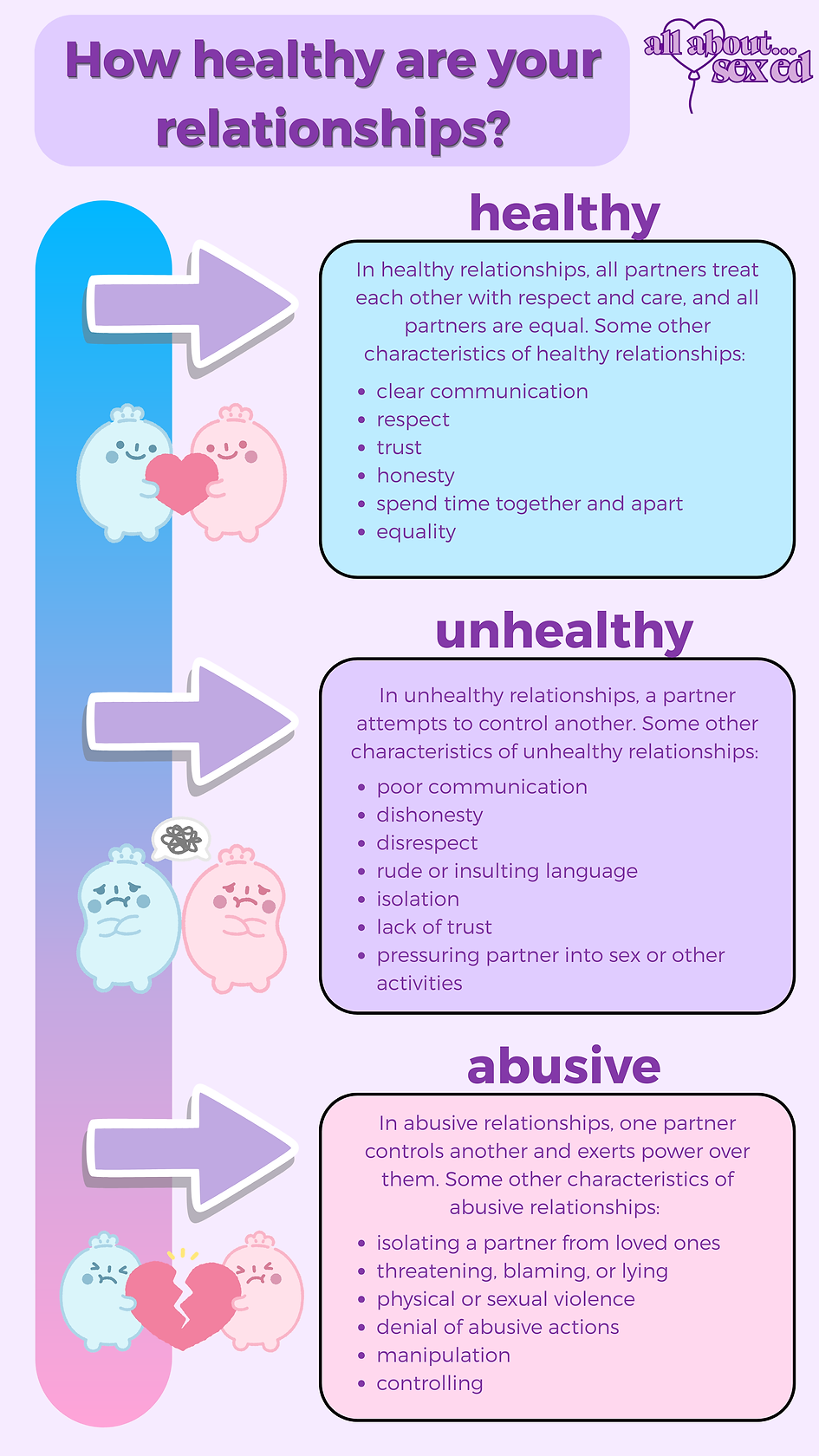
All relationships fall somewhere on a spectrum of healthy, to unhealthy, to abusive. The categories aren't neat and distinct; most relationships have at least some healthy characteristics and some unhealthy characteristics.
Which of the following characteristics do your relationships have?
.png)
Adapted from relationship spectrum resources by Love is Respect.
intimate partner violence
Intimate partner violence (IPV) is any kind of violence perpetrated by a partner in a romantic or sexual relationship. IPV can include physical violence, sexual violence, stalking, and/or psychological aggression. Unfortunately, LGBTQ+ people are more likely to experience IPV. Experiencing IPV can also put LGBTQ+ folks at an increased risk of depression, anxiety, self harm, suicidal ideation, and/or substance abuse.
Abusers exploit their partner's vulnerabilities to wield control over them. For LGBTQ+ people, abusers may weaponize existing homophobic and transphobic systems of stigma and discrimination to control them. For example, queer people could experience “identity abuse” if their partner threatens to out them, especially if it puts them at risk of losing their home, job, or loved ones. Abusers could also exploit a partner's possible isolation if they have been estranged from their family of origin. Sometimes, abusers might use identity-based insults to demean their LGBTQ+ partner, or create barriers to their partner engaging with the LGBTQ+ community.
sexual violence
Sexual violence is any sexual activity that happens without the full, enthusiastic consent of all involved parties. Sexual violence includes acts like rape, sexual assault, sexual harassment, and human sex trafficking, and it may or may not result in physical harm to the survivor.
Sexual violence includes:
-
using physical force to make someone engage in sex acts with them
-
emotionally manipulating someone into engaging in sex acts with them
-
engaging in sexual activity with someone when they are too intoxicated by drugs or alcohol to consent
-
engaging in sexual activity with someone when they are asleep
-
lying to a sexual partner about using barrier methods and/or birth control
-
touching another person's body without their consent
-
making repeated, unwanted comments about someone's body or sexuality
If you or someone you know has experienced sexual violence, scroll down to the support for survivors section for information and resources to help you with next steps.
power and control
Perpetrators of abuse and violence exploit their partner's vulnerabilities by wielding power and control over them. The LGBTQ+ Power & Control wheel can help us understand some of the ways that power and control can be weaponized to perpetrate different forms of abuse.

Adapted from the original Power & Control and Equity Wheels created by the Domestic Abuse Intervention Project and the LGBTQ+ Power and Control Wheel developed by Roe and Jagodinsky.
Do you recognize any of the forms of power and control from your relationships, or from the relationships of other people you know? Read on to learn about what to do if you recognize signs of abuse in a relationship.
support for survivors
If someone discloses to you that they think they might be experiencing intimate partner violence or abuse, you can help support them. Try the following:
-
Most importantly, listen to them and provide comfort and support.
-
Validate their feelings and remind them that whatever happened to them is not their fault.
-
Tell them that they deserve to be treated with respect, love, and care.
-
Don't push them into making decisions about their relationship before they are ready.
-
-
Help them connect to resources.
-
If they aren't sure if they're experiencing IPV, you can provide them with educational resources about the signs of abuse and violence.
-
If they have been physically harmed, help them get to a health care provider who can provide medical care and complete a rape kit and testing as needed.
-
If they want to report their abuser to law enforcement, you can help them call or connect them to a crisis counselor who can help.
-
See the slider below for organizations and information designed to support LGBTQ+ people who have experienced IPV, abuse, sexual violence, and/or human trafficking.
-
-
Create a safety plan.
- Safety plans are personal guides to help you prepare and stay as safe as possible in potentially dangerous situations, such as when you are in an abusive relationship or thinking about leaving one.
- Try this interactive resource created by the National Domestic Violence Hotline to create a personalized safety plan for you or someone else:
the Hotline's Personal Safety Plan Creator
If you think you or someone you know may be experiencing intimate partner violence or abuse, check out some of the resources below to learn more and find support.


help for perpetrators of abuse
If you think that someone you know might be abusing, controlling, or violent towards a loved one, or if you think you might have perpetuated abuse or violence towards someone else, what should you do? While you should always put your physical and mental wellbeing first — it is not a survivor's responsibility to guide an abusive partner through recovery — if it is safe to do so and you are able, you can help someone access services that can help them change.
Specially designed interventions called Batterer Intervention & Prevention Programs (BIPPs) are among the best ways for someone who wants to change their behaviors to do so. In BIPPs, perpetrators of abuse will learn all about abusive behaviors, their impact on their loved ones, and how to engage in healthy relationships and behaviors instead. After attending a BIPP, participants should be able to engage in relationships with healthy communication, trust, understanding, independence, and respect.
For someone who has perpetrated harm towards a partner but isn't able to access intervention services like a BIPP, try the following:
-
Learn about yourself and abuse: ideally with the help of a professional, examine what attitudes or emotions you held that resulted in your actions. Identify what patterns of control and abuse you have used in the past.
-
Acknowledge the harm you have caused: admit what you have done without making excuses or blaming others.
-
Make amends: apologize to anyone you may have harmed, without expecting forgiveness or even a response at all.
-
Change your behaviors: work to change how you react during conflicts, manage anger, view responsibilities and roles in relationships, and more.
-
Accept the change process: making serious changes takes time, and recovering from abusive behaviors doesn't happen overnight. Accept that this is a life-long process, and you won't be "cured".